 en
en  it
it
news
News
Current Status of Refrigerant Gas Regulations
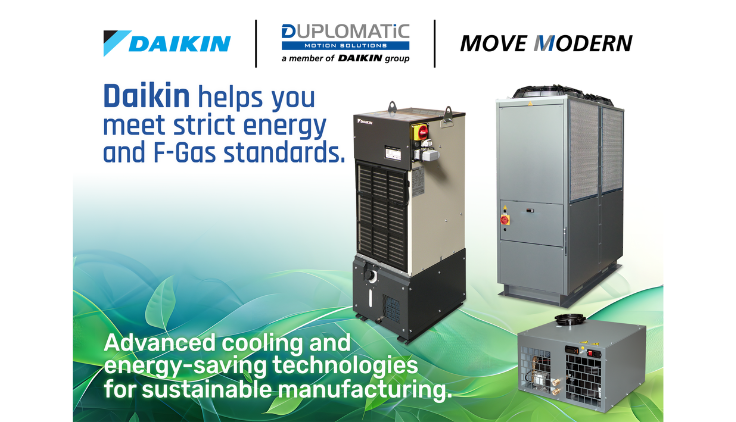
Current Status of Refrigerant Gas Regulations: What Will Change for Industrial Chillers?
European regulations aim to achieve climate neutrality by 2050 by progressively reducing greenhouse gas emissions associated with fluorinated refrigerants.
Starting from January 1st, 2027, the European F-Gas Regulation will require chillers sold in Europe to comply with the following limits:
- Cooling capacity ≥ 12 kW: refrigerants with GWP below 750.
- Cooling capacity < 12 kW: refrigerants with GWP below 150.
GWP (Global Warming Potential) represents the impact on global warming generated by one kilogram of refrigerant compared with the same quantity of CO₂.
The increasing demand for environmentally sustainable solutions, combined with the possible efficiency trade-offs associated with low-GWP refrigerants, is creating new challenges for OEMs and machine builders.
Daikin is globally committed to identifying the best balance between performance, sustainability and total cost of ownership.
In North America, regulations differ from the European framework. Since January 1st, 2024, chillers using refrigerants such as R410A, R407C and R134a can no longer be imported into the United States, while Canada adopted similar restrictions from January 1st, 2025. For these markets, refrigerants with GWP below 700 are required across the entire cooling capacity range.
For this reason, Daikin has already introduced R32 refrigerant (GWP 675) for chillers destined to the US and Canadian markets and is preparing the transition to R454C refrigerant (GWP below 150), which will ensure full compliance with future European regulations.
In line with both EU and North American F-Gas regulations, Duplomatic chillers will also employ R513A refrigerant (GWP below 700), together with R32 for specific North American configurations and R454C for European applications.
What’s ahead?
Looking ahead, Daikin, Duplomatic and Daikin Fluid Technology GmbH are working on next-generation cooling solutions capable of meeting future environmental requirements while maintaining the best balance between performance, reliability and sustainability.

Share
Latest News
-
News, Success stories
Success Story: LTE Lift Truck Equipment: greater efficiency in test benches with Daikin SUT technology
-

Eventi, News, Main news
Duplomatic supports “Japan–Italy: Friendship Continues” 2026
-

Eventi, News, Main news
Kaizen Race 2026: continuous improvement starts from everyday work